
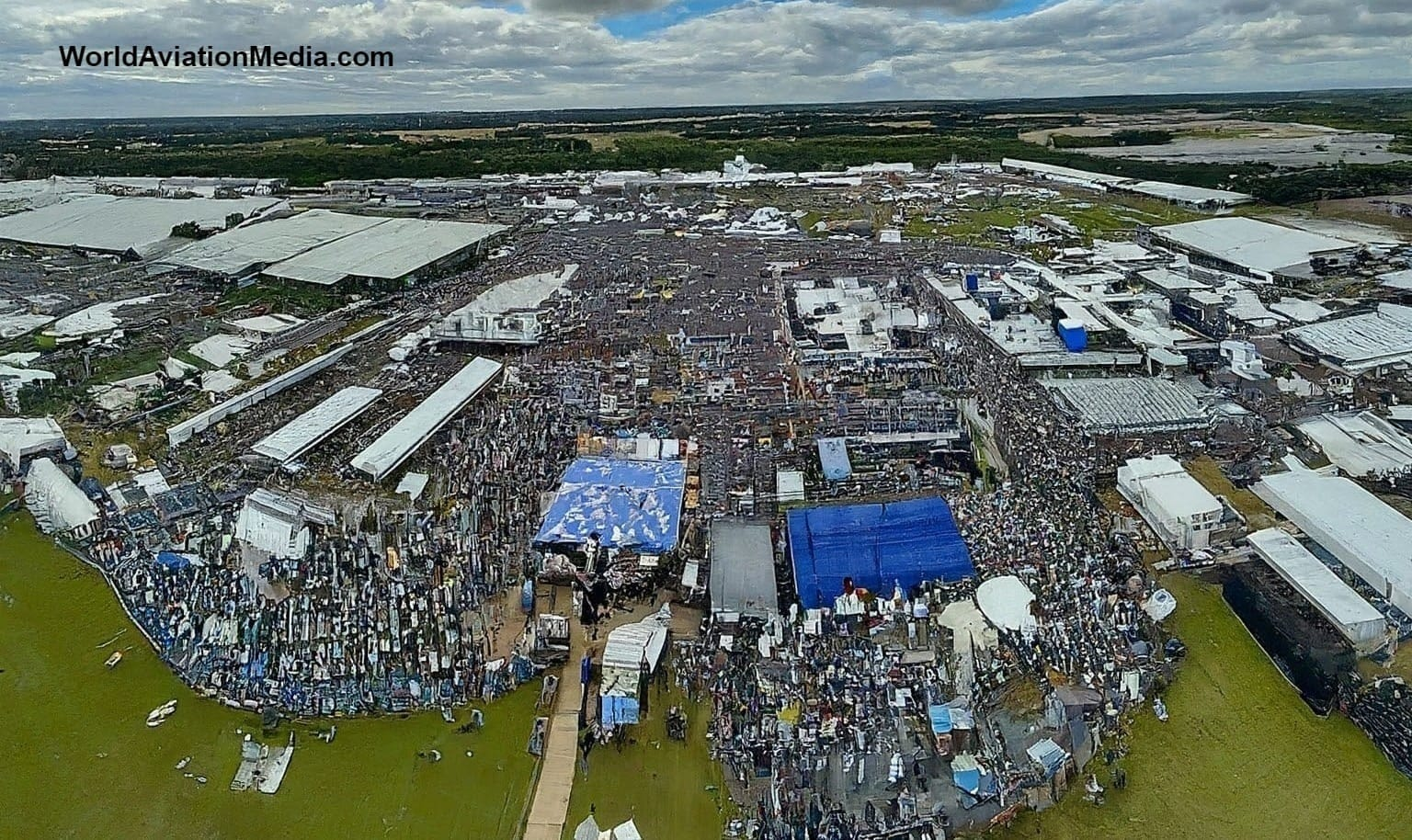
The Farnborough International Airshow (FIA 2026) opened on July 20 in the UK, generating over £36.2 billion in commercial transactions on the first day alone, including 234 firm aircraft orders and 466 firm engine orders, demonstrating the strong recovery of the global aviation market.
The show attracted a record 1,600 exhibitors, with defense companies accounting for approximately 50%, reflecting surging global demand for drones, missile defense, and AI-enabled systems driven by conflicts in Ukraine and the Middle East.
Irish lessor SMBC Aviation Capital emerged as the show's biggest buyer, announcing two blockbuster orders in a single day: first, 100 Boeing 737 MAXs (40 MAX-8s and 60 MAX-10s), followed by 100 Airbus A320neo-family aircraft (65 A321neos and 35 A320neos), with deliveries extending into the mid-2030s. This brings SMBC's total narrowbody commitment to 200 aircraft. CEO Peter Barrett said the new order will give airline customers access to a continuous delivery pipeline of the latest technology A320neo family aircraft into the mid-2030s.
Riyadh Air also announced a major fleet expansion: firming an order for 6 additional Airbus A350-1000s (bringing its firm commitment to 31 aircraft) and committing to exercise options for 28 Boeing 787s (20 of which will be the larger 787-10 variant). CEO Tony Douglas said the deals reflected the startup's focus on the long game as it builds toward serving more than 100 international destinations by 2030. Riyadh Air has received six 787-9s and serves six cities, with plans to expand to 22 destinations by March 2027.
Philippine Airlines ordered 15 Boeing 787-10s, citing the aircraft's superior cargo capacity. IndiGo continued its shift from Pratt & Whitney GTF engines with a record CFM Leap engine order.
On the defense side, Lockheed Martin unveiled the low-cost PAC-3 ACE interceptor, priced at less than half of the current PAC-3 MSE. MBDA introduced an anti-drone swarm interceptor. Loganair announced plans to field Europe's first all-electric fleet.
Notably, engine supply and maintenance capacity have become the industry's biggest bottleneck. Analysts warn this could force airlines to keep older jets longer and push some deliveries into the early 2030s.